

JOIN NOW LOG IN
iVillage GardenWeb iVillage GardenWeb THE INTERNET'S GARDEN & HOME COMMUNITY ADVERTISEMENT
Blogs Forums Photo Galleries Ask The Experts Tools & Directories        
Return to the Woodworking Forum | Post a Follow-Up

 o
Staining pine on Andersen french doors

Posted by Shezzy_in_SJ (My Page) on
Thu, May 12, 05 at 12:17

We want to stain the pine on our Andersen french doors and bay window. We want to do some testing first, of course.

I was wondering if anyone had advice about which staining, or dye, product is best with pine. Is there?

What are the staining characteristics of pine? Uneven? Streaks? Blotchy? Will it take a medium dark "cherry" stain?

Is the gel stain good to use on vertical surfaces, since these are already installed?

We'd like to put a tough finish on, too. Dog occasionally puts his paw to the door. (Not scratching it really, but just slightly dragging it down.) I was at the hardward store the other day and saw something that said "diamond" finish. Do I look for something like that?

Any good websites to send me to?

Thanks,
Sherry.


Follow-Up Postings:

 o
RE: Staining pine on Andersen french doors

Pine is relatively difficult to stain evenly. A pre-stain blocker is normally used to try and even out the absorption of the wood.
Even practicing on another piece of wood may not work unless you can identify the exact species of pine used in the doors.
Pigment stains tend to be more forgiving of uneven absorption by the wood.


 o
RE: Staining pine on Andersen french doors

Recently built a home & stained all the pine woodwork with a red oak colored stain. Used a wood, pre-conditioner on the windows & doors first. Worked great. Stain went on very even not blotchy at all. The stain and pre-conditioner were both from Minwax. Would highly recommend.
As for sealer, we put on three coat of a water-based poly acrylic.


 o
RE: Staining pine on Andersen french doors

Also used Minwax products to stain all of the Andersen windows and french door in our 3 yr. old house. We also stained all of the pine woodwork including our 6 panel pine interior doors using Minwax's Early American colored stain. We finished the project of with two coats of Minwax's gloss polyurethane We are ver happy with the rich quality finish. One note, we did not use a pre-conditioner before we did any staining.
Good luck,


 o
RE: Staining pine on Andersen french doors

Pine can stain blotchy, however as has been noted, much depends on the species and grain pattern of the wood that is being stained. A light sanding of the surfaces to be stained with 220 grit sandpaper may help.

There is no real advantage to a gel stain for vertical surfaces. You don't want to put on a heavy coat of stain. Apply the stain lightly with a rag and rub into the wood. Wipe off the excess with another rag after letting it set a few minutes.

A conditioner will provide more consistent color, but you will not get as dark a color because the conditioner, by it's nature, prevents absorption of the stain. Some folks use analine dyes with great success on woods that are difficult to stain with standard pigment stains. You buy a dry powder and mix it so that you can control the color. I've never used them so I can't offer any practical advice on them, but you may want to check into that.

As for the finish, over time even gentle scratching from a pet will become evident in just about any finish you apply. Try to look for a finish that is recommended for wood floors or possibly bar tops. They may hold up better.


 o
Staining pine on interior wood trim/doors

This is an older thread, but I have a similar issue. We are staining pine baseboard and window trim and our pine windows. Most likely using Minwax stain (water based - puritan pine) or Ace stain (oil based - shaker pine).

My Questions are:

(1) Do we need to do a preconditioner? Why or why not - )what are the results with and without)?

(2) What are the benefits/drawbacks to using oil or water (besides the smell of oil-based), i.e., does the oil based coat the wood better with less splotchiness? (I like the oil based color a little bit better - but not so much more that it is essential to me - but have heard clean up is a problem with oil.)

(3) Should we sand or use steel wool between coats? If sand, what grit?

(4) What finish is receommended - polyurethane or varnish or lacquer or what!?!

(5) Does anyone have pictures of their stained interior trim/windows?? If yes, please post and if you recall, please provide information regarding the process you took to stain and the products you used.

Thanks so much.
kpk


 o
RE: Staining pine on Andersen french doors

1) If you are staining pine and plan to use Minwax stain, you need to do something. Pine is notoriously blotchy with certain stains.

Conditioners

2) My recommendation is if you are using an oil-based finish, use an oil-based stain. If you are using a water-borne finish, use a water-borne stain.

3) I normally sand varnishes and water-borne products between coats. NEVER use steel wool between coats, especially for water-borne finishes. Use 3M's sandblaster paper (P400 grit) and / or maroon Scotch-Brite pads. Steel wool will leave behind shards of steel that will rust.

4) Chose any finish that you are comfortable with and gives you the look and protection you want. P.S. Polyurethane is a type of varnish. But there is a big difference between oil-based polyurethane and water-borne polyurethane.


 o
RE: Staining pine on Andersen french doors

Thank you Bobsmyuncle !


 o
RE: Staining pine on Andersen french doors

Just found this thread as I'm getting ready to stain interior of our Andersen windows.
Bobsmyuncle, you stated there is a big difference between oil=based and water-borne polyurethane. Would you let me know what that difference would be? Thanks. I'd love to use the water-borne produncts as the cleanup is so much easier, but I mainly want to get the best finish.
Jeanie


 o
RE: Staining pine on Andersen french doors

They are quite different both chemically and the way they cure. W/B products are mostly acrylic polymers. The use of the word "polyurethane" on them is largely gratuitous. I suppose people think, "Hey, Polyurethane, (the ubiquitous finish) and it's water based," and that's all they know.

I use them professionally, but I have the ability to spray. They are a bit more difficult to apply with a brush or rag and get a good, smooth finish.

See the articles on the "Hemlock door" that I posted.

If you decide to use an oil-based wiping varnish, clean up is really easy. Throw away your rag and take off your gloves.


 o
RE: Staining pine on Andersen french doors

Thanks for the information, Bob. I really appreciate the help. Jeanie


 o
RE: Staining pine on Andersen french doors

okay, I stained with a rag and now I'm spending hours cleaning the window panes...any suggestions. Next we varnish, how to I get that off?


 o
RE: Staining pine on Andersen french doors

Get a really good 1" angled brush---Purdy makes some---and applt the varnish very carefully, not getting any on the glass. That actually takes less time than cleaning up the glass afterwards.


 o
RE: Staining pine on Andersen french doors

Ok, I'm going to stain my new Anderson sliding door. The sliding door itself is pine and the outer trim is oak. I had stain matched to the existing woodwork color. I have the pretreat conditioner and will apply it to the pine but not the oak correct? Wait 24 hours, sand with 400 paper?? Wipe with tack cloth. Apply stain, let dry 24 hours, sand again??? I bought Waterlux as my final finish. I also read the thread that said to fill the nail holes AFTER I do the staining. I can not find the powder to mix with the stain to fill the nail holes. What do I do with those??? There are a LOT of them. I'm very nervous about ruining this expensive door and appreciate any feedback on what I've outlined. Can I use the foam brushes or should I use my good Purdy brushes??? I could also wipe all of this on. Can I tape the glass to avoid getting the waterlux or other stuff on it? Should I tape off the oak and stain the pine sliding door 1st?


 o
RE: Staining pine on Andersen french doors

To add to the discussion...specifically the comments about there being "a big difference between oil-based polyurethane and waterborne polyurethane(s)." Yes there are, but there are excellent waterborne finishing films that outperform oilbased.

The Waterlox products and the hardwax oils may some day compete effectively with the polyurethanes.


 o
RE: Staining pine on Andersen french doors

We recently purchased Andersen pine French doors.
We started by sanding with the finest grit sandpaper. Then we wiped it down with a slightly damp soft rag.
Because the grain coloration was uneven, we used the Minwax pre-conditioner. We chose a warm honey stain.
Followed up with two coats of Minwax clear Satin Polyurethane.
Doors look great except- when I was on my second urethane coat, I saw where the stain did not take evenly behind the hinges.
What to do?
I am thinking wait until the Polyurethane dries and then sand/pre-treat/stain/Poly again.

Help.... I am a perfectionist and want this to be right!
Thanks


 o
RE: Staining pine on Andersen french doors

Minwax prestain conditioner (red can) and 3 coats of oil-based Wipe-on poly - sanded with 220 b4 conditioning, did not sand b/t conditioner and 1st coat of poly, *did* sand with 220 b/t coats of poly.

Sign between

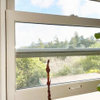
Kitchen window - sanded with 220, prestain conditioner, Minwax Honey Maple gel stain, 3 coats of oilbased Wipeon poly sanding with 220 between coats of poly, not b/t stain and poly.

window stool done!

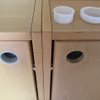
oak shoe left of stove

Sorry no better pics - just had these in Photobucket.

The Andersen windows and the slider seemed to be finished a little better than my 6-panel doors that had vertical milling marks on them, so they didn't require much sanding.

Doors - radiata pine

Sanded 220, prestain conditioner, gel stain, 1 coat of Wipeon poly, sanded 220, another coat of poly, sanded 220, another coat of poly, sanded 400, poly, 600 grit, poly, 600 grit, and final (6th) coat of poly. Can still see milling marks/sanding marks at low angle light but this was the first door I did. I should have sanded with 100 first.

closeup of bathroom door

bathroom and linen doors

This one I tried a sanding sealer coat of Sealcoat shellac under the Wipeon poly - I think I ended up with 150 grit sand, prestain conditioner, Honey maple gel, 1 coat of poly, then sanded with 220, put 1 coat of shellac, sanded 320, glazed with gel again, then 3 coats of poly sanding with 400 grit between each coat.

linen door at top of stairs

I haven't finished any double-hungs yet except for one in my garage and one in my attic, so don't have pics. The one in the attic I used Thermatru's water-based exterior poly as an experiment and I didn't like the finish. The one in the garage I used Sikkens Cetol Door and Window and it looked beautiful - too bad it's in upper level with no floor and no stairs, unfinished garage LOL. But I am considering switching from the Minwax Wipeon poly I used on all my interior trim to an interior Sikkens product (brush-on) for the sashes, just b/c I was so impressed by the exterior Sikkens.

I taped all the glass prior to sanding and staining, did not remove tape until last coat of finish was dry. HTH.


 o Post a Follow-Up

Please Note: Only registered members are able to post messages to this forum.

    If you are a member, please log in.

    If you aren't yet a member, join now!


Return to the Woodworking Forum


iVillage GardenWeb: The Internet's Garden & Home Community  
  iVillage Home & Garden Network