



|
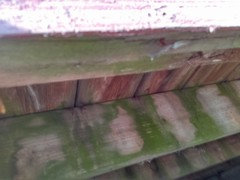
| Can anyone tell me if there's a way to distinguish between treated and untreated wood?
I have some wood pallets that I'd like to convert into planting boxes, but I need to avoid treated wood so that nothing bad leaches into the vegetables. Any suggestions? Thanks! |
Follow-Up Postings:
|
- Posted by poohbear2767 (My Page) on Sun, Apr 5, 09 at 2:09
| Pallets are generally made of the lowest grade wood available. I don't think you have any worries there. Still, in this day and age of recycling, I suppose it is possible that treated wood mite find its way into pallet production. The old CCA treated stuff had a slight green tint to it. The new ACQ treated stuff has a green tint when new. After it has weathered a bit it might be hard to see. If you can test the wood chemically it will show copper content. Pooh Bear |
|
| Thanks for the information. As far as testing the wood goes, is there something simple I can pick up from Home Depot or something? |
|
- Posted by poohbear2767 (My Page) on Mon, Apr 6, 09 at 8:09
| I don't know of a way to test wood for these substances. I would try searching thru science experiments online that deal with litmus tests and testing for metal content. I really doubt you have anything to worry about. I would be very supprised if you had a pallet made of treated wood. Found this with a Google search: Last time I checked it was available from SPECTRUM (800-772-8786). The part number is P-358 and used to cost $21.90 + shipping. Please be sure to read the MSDS on this chemical – as it has to be handled carefully, as I recall. But, it works well, and I have a small amount on hand and have used it myself to identify CCA wood on my property. It’s easy to use, too. You find an unpainted portion of the wood and spray it on. (Painted wood can test positive, due to trace metals in some paints, so use it only on unpainted wood.) After spraying, wait 2-3 minutes. If the color changes from orange to red or a darker color – it contains chromium metal and should be disposed of properly (and never burned – which will release the arsenic in the CCA). I'd be interested to know if you find out anything. Pooh Bear |
|
| Thanks for all that detail. I noticed that the pallets I had were stamped with "HT" and some according to Wikipedia that means that they've been heat treated, which I assume is fine in that no chemicals were used. |
|
- Posted by poohbear2767 (My Page) on Mon, Apr 6, 09 at 18:32
| Just a guess, but heating them would remove most of the moisture. That would help keep the weight down, decreasing shipping cost. I have noticed that new pallets are extremely dry. I'd have to look into this more tho. Pooh Bear |
|
| As a rule, treated wood commonly sold to the public is pine. The treatment recipe turns the wood a bit more green than normal(CCA) and a lot mopre green(ACQ) than normal. The other treatments actually look like the wood has been painted green. If the wood has aged to a gray color on the exterior, making a fresh cut to expose the interior will show the color. Yellow/white means no treatment. PT wood is treated so the effects of time/insects/water do not have as much effect---the wood lasts much longer than untreated wood. There are two basic kinds of pallets---heavy duty and one use. One use pallets are often made of pine. They are used for shipping appliances and small machinery. The wood is thin and can be torn apart easily. Heavy duty pallets are built for repeated use and sometimes have to be cut apart, as the glue/fasteners make tearing them apart very difficult. These types are usually made of white oak. I have never seen white oak treated with the same stuff that is used for pine. |
|
- Posted by mike_kaiser (My Page) on Tue, Apr 7, 09 at 9:55
| Why not just get some cedar or cypress and build you planters out of wood you KNOW hasn't been treated. Most pallets aren't built out of wood suitable for this kind of project anyway. Save the pallets for flower planters or some other project. |
|
- Posted by CorpusCallosum (My Page) on Mon, May 7, 12 at 12:44
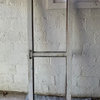
| Hi I have the same question. I have a piece of found wood labeled: TECO Also it says GRAVEYARD on it. The wood does not look green, and I cut a piece off to check, and it is not green on the cut either. But, since I plan to use this in my garden I want to know for sure if it is safe to use. Does anyone know what this label and numbers mean? Thanks |
|
- Posted by millworkman (millwork4u@gmail.com) on Tue, May 8, 12 at 8:43
| it's 5/8" sheathing and from that I would have no way to tell for certain but I doubt very much that it was pressure treated. |
|
| Your wood is not treated. According to Teco website your wood was designed for indoor construction. Here is the link i found my information. |
Here is a link that might be useful: Teco explaination of markings
|
| I agree with Mike. Why not get the best wood for your food project. Then you will also know it's food safe. |
Please Note: Only registered members are able to post messages to this forum. If you are a member, please log in. If you aren't yet a member, join now!
Return to the Woodworking Forum
Instructions
- You must be a registered member and logged in to post messages on our forums.
- Posting is a two-step process. Once you have composed your message, you will be taken to the preview page. You will then have a chance to review the contents and make changes.
- After posting your message, you may need to refresh the forum page in order to see it.
- It is illegal to post copyrighted material without the owner's consent.
- HTML codes are allowed in the message field only.
- No advertising is allowed in any of the forums.
- If you would like to practice posting or uploading photos, please visit our Test forum.
- If you need assistance, please Contact Us and we will be happy to help.