




How good is Weather Shield?
We have several bids to replace our 17 windows--12 casements and 5 DHs--with wood/clad argon filled, and we've boiled our choice down to two. The Pella Architect (U34) bid is about $17,000 and the Weather Shield "CustomShield" model with Zo-e-Shield glazing (U 24) is about $10,500. We know that the Pella is an excellent window, but the price is very steep. We like the lower price and lower Ufactor of the Weather Shield, but we know nothing about this brand except the two very negative posts on this forum and the fact that Consumer's Reports trashed it., Has anyone had a good experience with Weather Shield? Does anyone here recommend it? Comments would be much appreciated.
Comments (110)

Michael Kaplan
6 years agoI have a 6000 sq ft house. 17 years old. Weather Shield wood SDL windows. Painted wood sashes, aluminum clad frames. I have had about an 80% seal failure rate up to now including some of the replaced windows. I have spent $thousands replacing them. The installer laughs at WS windows. This company is basically criminal. You couldn’t pay me to use their product. No customer service to complain to. They refer you to their non-existent dealers. Stay away!
 PRO
PROWindows on Washington Ltd
6 years agoFunny this is bumped up this week. Just went by a friend of a neighbors home and they have Weathershield windows as well. They are actually TDL (True Divided Lite) because apparently the builder wanted to spend as MUCH money as possible. There are seal and Low-e failures all over the home in addition to wind blowing through the house like the windows are open. I will get some pictures of them next week, but they are quite bad.
They are the second owners of the home and when they first inquired at the 12 year mark on the windows, they were refused any warranty coverage via the rule regarding warranty transfers.Related Professionals
Safety Harbor Window Contractors · Farragut Window Contractors · Northridge Window Contractors · Cocoa Beach Window Contractors · Homestead Window Contractors · East Patchogue Interior Designers & Decorators · Coffeyville General Contractors · Corsicana General Contractors · Dunkirk General Contractors · Kailua Kona General Contractors · Mankato General Contractors · Sun Prairie General Contractors · Tabernacle General Contractors · Warrenville General Contractors · Fremont Carpenters
yokaren
5 years agoWe love our weathershield casement windows. Installed in 2000. Not one issue. Still perfect. We live in Wisconsin so they get put to the test.
Robin Bravante
5 years ago@ Meremor; Hi, Was just wondering these years later how your Weather Shield windows are holding up. Especially after reading this rather spirited back and forth. Looking to replace my Pellas. They haven't worked properly since day 1. Thanks for any info.
boilerstoker
5 years agolast modified: 5 years agoI bought the Weathershield Visions 2000 vinyl windows. E-coating has failed in majority of glazing. Insect infiltration happens in the same windows each season. Last season I placed masking tape on interior of window slides on the worst two vertical sliders; that stopped the thousands of from entering and it ruined the nesting habitat. Early on warranty service replaced several double glazed pains at no cost to me except labor which I did. But all along the company knew about problems, Class actions litigation,etc. They chose not to recall or notify. Had I known I would have carefully examined each window and requested all 40+ Windows, that's 80+ double pain.
Service became an insult. The company and its product ha been the worst experience.
When I have time, I will remove each pain, one at a time. Get set up on a glazing table in warm or hot air. Direct sunshine in summer is best. ut along the glue seal edge along the side of the e-coated glazing, clean it, the e-coating will easily wipe off, use isopropyl alcohol. Reset pains with fresh glue. If that works and is simple/fast/safe. Otherwise buy new glass locally, Weathershield half price plus shipping is expensive and unreliable.
A few frames will have to be removed and replace entire window. Screens also are poor fit. Insect come through the edges.
It was a bad choice.
E-coating was code required, would avoid it if possible. Any company can have defect, Weathershield warenty service in unreliable in my oppinion.
Robin Bravante
5 years agoOh my. So sorry for your WS nightmare, Boilerstoker. Thank you so much for your insight and sharing your experience.
M McLeod
5 years agolast modified: 5 years agoOur seven new Weather Shield windows (and one door) were installed about a month ago. They are all wood clad, most of them are casement windows. Two arrived broken (wouldn't open due to defective hardware) and one malfunctioned within a week (won't lock into place when closed). Three of them came with the wrong color of hardware, black versus brushed nickel. Given our immediate experience, I believe Weather Shield windows are a low quality product. They have said they will replace the wrong hardware and fix the problems, I'm still waiting. At present I wish I'd paid attention to the bad reviews I've seen elsewhere.

millworkman
5 years agoI will say it does happen that hardware is non-fuctioning or not functioning properly (very rare occasion however), and the hardware finish probably was an ordering error and an easy fix. I will say I am in no way shape or form sticking for Weathershield as personally I would never use or recommend them. How they handle issues is the mark of a company as issues do happen and the quailty companies will take care of the issues promtly and properly under normal circumstances.

jillie
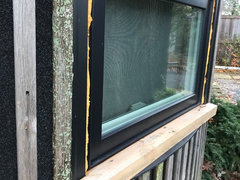
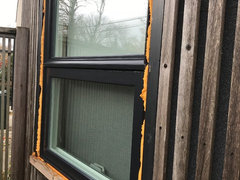
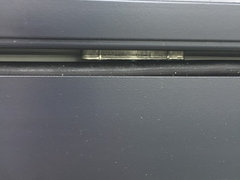
5 years agoI ordered my Weather Shield windows over a year ago. I was replacing vinyl windows and wanted the best quality I could find, I looked at Pella & Weather Shield and I chose the WS Contemporary Collection. These were supposed to be engineered for high end homes with expansive views. "eliminate the compromises" from there brochure. The first order came completely the wrong windows and the second batch didn't come until August 2018. They are still not installed properly and it's November. I ordered full replacement windows and I got a narrower version, the sound his horrendous and there are drafts and broken mechanisms and missing screen handles. I wish I had read these reviews before I ordered - plus I think I paid for full replacement and only got inserts. $18,000. for 6 windows. I guess I really trusted them and now I just feel bad every day. Plus I don't trust they even measured right since there is so much caulk - over an inch and they used the old brick mould. I feel so stupid. I can't figure out how to add pictures
 PRO
PROQWD-VA
5 years agoWeatherShield is a manufacturer of windows not an installer or contractor who clearly does not know WTF they are doing.
 PRO
PROOut of the Woods Inc.- Window & Door Specialists
5 years agoSounds like all of your problems are the installer and probably the dealer you bought the windows from. I'd take your issues up with them 100%.
- PRO
Windows on Washington Ltd
5 years agoI am sorry to see this project go so far off the rails for you jillie, but I have to echo the sentiment of the previous posters in that the fault is overwhelmingly going to lie with whomever did that abomination of an installation.
jillie
5 years agoI guess your right but when I called WS they don't even offer any support - I assumed these are trained dealers - WS should pull their distributorship or act as some kind of mediator because in the end it's their product that looks bad
millworkman
5 years ago"WS should pull their distributorship or act as some kind of mediator because in the end it's their product that looks bad"
Actually in my opinion their product is bad enough that they don't need help in that regard. But as far as installation, IF you could even get a rep to come look and the rep knew what he was looking at he would say, yep all the installer's issues, have a nice day.
fridge2020
5 years agolast modified: 5 years agoWS sells through distributors, meaning anyone with a pulse can go buy the windows. A garbage man that wants to make some extra cash can do so on weekends, and frankly thats what your install looks like. Measurements are on the installer as well. I’ll take a wild guess and assume that this was a “good deal” , and not an established window installation company because if it was, you would have already ripped them to shreds. WS makes windows. i agree with millworkman they aren’t that great at it, but that’s not your problem here. At this point you can see if you can get lucky and see if you can find a good window installer with a soft that will pull these and reinstall properly, but you may just have to chalk this one up to an education at the school of hard knocks and start from scratch. That’s why they say only rich people can afford the cheap option, because you may pay twice. Either way, WS has nothing to do with the way that their windows were installed by this butcher
M McLeod
5 years agoFollow-up to my earlier comment about my personal experience with the Weather Shield windows. They have repaired everything that was wrong, and have said they will get the correct color window screens to me this week.
I think it's important to purchase from a good representative, as they are the ones who have to push for repairs and replacements.Jeanine Evans
5 years agoWe purchased a Crestline/WeatherShield window from Menards. The seal between the panes of glass began to leak and there was fogging and discoloration between the glass. Then, the window crank mechanism broke and the window has been stuck shut for six months now. We submitted a warranty claim and they gave us quote for a discount on a new pane of glass and a new mechanism….not a new window, just the parts…that we would have to install ourselves. We were hoping to buy a new replacement window at a discounted price, but were told that was not an option. We paid for a replacement window crank and were told that we’d have to pick it up at the Menards at which we bought the window. Shipping to our house would be $100 extra! Not a big deal to pick it up at the store, but $100 is an exorbitant price to pay to have a small repair piece mailed to our house. When we inquired about how we would be notified when the window crank had arrived, they said that we will not be notified and will have to periodically call the Menards to where the part is being shipped. All of this business was conducted after multiple phone transfers to multiple departments. The system was completely inefficient and maddening and the overall level of coverage offered by the warranty was weak, at best. We will keep living with our clouded-over window, if we can manage to get it out of the opening and replace the broken latch handle. We absolutely cannot and will not recommend purchasing Crestline/Weather Shield windows.
millworkman
5 years agoTruth hardware can be bought most anywhere on line, or I would recommend Blaine Window to purchase from. And the glass can be replaced by any local glass shop. No need to get Menards and or Crestline/Weathershield involved since they really are doing nothing for you at this point.
rayurban57
5 years agoAs a counterpoint, we installed a large, custom, all wood Weathershield window with dual pane insulating glass in our kitchen 23 years ago; 2 picture lites, 2 casement sashes, cherry interior. Installed it myself. No problems at all.
millworkman
4 years ago"Don't buy Weathershield... bottom of the barrel."
Anything to substaniate your statement? I am not saying you may correct but just a blanket statement like that is tough for people to get behind.- PRO
Windows on Washington Ltd
4 years agolast modified: 4 years ago+1. Folks that read these threads usually like a bit of background.
HU-39028394
4 years agoI installed Weathershield casement windows in my house built in 1997. I’ve had to replace 13 south facing windows and 3 west facing windows due to seal failures. Maybe they’ve improved a design flaw because the replacement windows have not failed yet. Most were after 10 years so I had to pay half the replacement costs. Now past 20 and it’s pay the full shot And I got 2 more seal failures to deal with. I wish I had gotten a more reputable brand back in 1997. Oh well.

Lisa Popp
4 years agoWe built a new log home by The Original Lincoln Logs in Warrensburg, NY. They only offered Weather Shield windows with a 20 year warranty. We felt safe until the seals failed on our patio door after we'd been in the home only 15 months. Since Weather Shield's small print states they do not cover the installation service later than two years after delivery, they say we need to pay to have their attempt at replacing their faulty product installed. So much for their 20 year warranty! Do not purchase Weather Shield windows or Crestline or any other name this company goes by. The parent company also owns Peachtree. Buyer Beware! This company does not stand by their product, which if you read reviews is failing too often.
millworkman
4 years agolast modified: 4 years agoThey used to use Hurd here on LI in those homes, They were no better. SNE is the company that owns them now, not sure if the Shield family is still involved or not. Although in fairness most companies do not install glass from seal failures at all so two years is not bad, most just hand you the glass.
Elle Emmy
3 years agoStrongly recommend not buying WeatherShield windows. In five years we have had 70% failure of the seals. Customer service is poorly managed and the leadership team hides behind their frontline workers. In five years we have not received an honest response about the design flaws (we believe it was the material used in the spacers). Please review the BBB website, and the various comments online. This is not a company that acts in good faith and customer satisfaction is a complete misrepresentation of reality. The various class action lawsuits appear to be closed; so difficult to determine outcome.
- PRO
QWD-VA
3 years agoWhat year did you purchase the windows? You need to get the dealer you purchased from involved and ask them to come take pictures and take an inventory of everything that is failed. You need them to be your advocate and assist in solving the problems since you purchased through them. Time for them to step up. All they need is the spacer bar numbers found between the panes of glass. 5-years is not very long at all so you should get what you need at no cost but calling the manufacturer isn't the way to go - call the person you bought from! Just FYI, WeatherShield strictly buys insulated glass units now from both Cardinal and Guardian - they no longer just buy sheets of glass and insulate it themselves like they did previously.. Most window brands do the same thing and it looks like in the last few years they decided to go that way too - probably a good thing. I say this because if you get replacement glass the spacer between the glass may look different compared to what they used years ago.
jdwhite1
2 years agolast modified: 2 years agoNot sure what to make if ll these comments. perhaps old ones not as relevant as they might seem? at least as of 2022, weathershiled does allow 1 transfer of owneership, the warranty is not pro-rated over its duration. and they do not make vinyl windows. and on inspection they make a very well built product for the price with many nice features aNd options. and cardinal glass is cardinal glass , right / ?
millworkman
2 years agoQuality control, fit and finish and customer service all are and always have been severely lacking whether you want to believe it or not.

Reuben Cahn
last yearTo the window pros on this thread, what mid-priced windows would you recommend as an alternative to the Weathershield Signature line? Replacing roughly 18 awning and casement (double and single) windows, three sliding doors, and two french doors with sidelights. Started off looking primarily at Milgard Ultra and Marvin Integrity and Elevate. But have also looked at and received recommendations for Jeld Wen Siteline, Andersen A line, Weathershield Signature. My interest in Weathershield was peaked by this video https://youtu.be/tA6itloKMYY. And when I searched for a dealer local to us, I found they were carried by a company with a very good reputation that reps Louwen and a series of high end aluminum and steel windows. I assumed that a company of that sort wouldn't risk its reputation carrying a mediocre lower end brand. All the feedback here gives me pause. If it makes a difference, we are in Southern California close to the coast. Again, we are looking for mid-priced windows. I would love to just order Marvin Ultimate but I can't justify the expense. Thanks for your help.
millworkman
last yearWhat did you like about the Integrity and the Elevate? What did you not like? What are you looking for the exterior finish to be? Interior finish? The Marvins you mention are fiberglass exterior, with either wood interior or all fiberglass. Milgard Ultra is all fiberglass. W/S is aluminum clad wood, Andersen is Fibrex with wood interiors and the Jeldwen is just awful in any series.
- PRO
Windows on Washington Ltd
last yearI wonder which of those two windows in that video that the person in the video actually sells. Hmm.
millworkman
last yearI just reread my post and did not make clear the fact that I would not use W/S or Jeldwen anything in a chicken coop.
Reuben Cahn
last yearlast modified: last yearWhat I like about the Milgard, Marvin, and Andersen A series include
- a relatively clean exterior appearance (with Andersen A Series the nicest looking with butted joints) and thinner frames
- supposedly durable exterior color/finish
- supposed strength/durability of fiberglass (though the A series as I understand it is part fiberglass, part fibrex) and general resistance to salt air
- for the Marvin Elevate and Andersen, I like the wood interiors and the name recognition because I believe both have some resale value and I think the wood is attractive.
Dislikes: We're considering the Marvin Integrity only for one bathroom window in shower because it offers only grills between glass. No other strong dislikes of any of these though I do wish they offered push out casements in these lines. That option seems confined to each brands top line. If we were looking at double hung, I would have problems with the Elevate's exposed jamb liners, but we're not.
FYI: We're looking at black finish inside and out. House is transitional.
oberon476
last yearlast modified: last yearMy interest in Weathershield was peaked by this video https://youtu.be/tA6itloKMYY.
There are so many little (and a couple big) things wrong with that video, that I could spend way too long commenting on his claims and comments...
Reuben Cahn
last yearI wish you would comment--at least on the big things wrong. For me as a homeowner, the video seems reasonably convincing, though I understand he's attempting the sell the windows he reps. Knowing what's wrong with his claims helps me as a homeowner to understand what I should be looking for and what I should avoid.
millworkman
last yearWithout even looking at the video, W/S has forever been know as a poor performing product with mediocre fit & finish and lousy customer service. I do not need a sales pitch to tell me that it is a fluff job.
oberon476
last yearlast modified: last yearBefore replying I watched his three window videos comparing Weathershield Signature Series to Marvin Elevate, Andersen 400 series, and Pella Lifestyle or Proline.
What struck me was that IMO his basic premise is wrong. He is comparing windows of similar price point but constructed with different base materials and components (Marvin and Andersen) or at a clearly stated different quality level (Pella) rather than equivalent products. Since the Weathershield is supposedly a premium clad wood window, for a true apples to apples evaluation between products he should have been using premium clad wood products from the other companies as well - Marvin Signature, Andersen E Series, and/or Pella Architect series. He could still have made the point that the Weathershield is a much less expensive product (not saying it is or isn't, just following up on his premise) than the others but offers better options such as...etc.
Since he liked talking about cladding a lot, lets start there.
As presented, WS uses extruded aluminum cladding while Pella uses roll-form aluminum, Andersen uses vinyl with painted wood sash, and Marvin is a fiberglass window. The comparison with Pella makes sense, but M and A are different products entirely. Comparing to equivalent M and A windows, both also use extruded aluminum, but not quite the same as the W product.
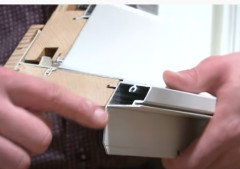
This is the WS extruded aluminum. Below is Crestline Elite window showing extruded aluminum for further illustration since it's basically the same as the WS.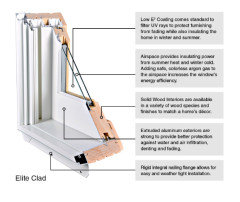
For comparison below are pictures of both M and A extruded aluminum being compared to roll form.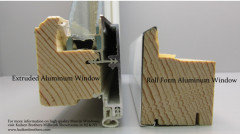
Marvin on the left and typical roll form to the right.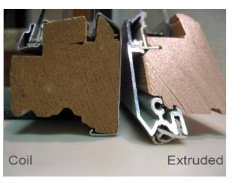
Andersen E series to the right and roll form left.Although extruded, note how the WS aluminum is up close and personal with the wood, much like roll form, versus the gap between wood and aluminum in the M and A examples.
Mr. Hauser makes the comment in all three videos (if I recall correctly) about WS using a secret formula preservative to prevent wood rot while commenting that the other companies don't. Perhaps that's because with the method that WS uses to clad their windows, they need it more?
And all that said, of his comparisons only the Pella was an aluminum clad window and frankly if someone held a gun to my head and forced me to make a choice between the Pella Lifestyle and WS Signature I would likely tell them to go ahead and shoot, but failing that I would probably actually pick the WS window over the Pella as much as it pains me to even contemplate that choice. Again given that WS claims their Signature series is elite while the Lifestyle is sold as a totally builder grade product.
And once again, neither the Andersen 400 or Marvin Elements is even an aluminum clad wood window in any case.
Okay this is long enough so end part 1.
oberon476
last yearlast modified: last yearLet's talk glass and spacers and LowE and argon from the videos.
First, and not mentioned in any of the videos that I recall, Andersen, Marvin, Pella, and Weathershield all use Cardinal glass and Cardinal LowE coatings.
In the Andersen to WS comparison video, Mr. Hauser explains that while AW uses a stainless steel metal block spacer, which is bad, WS uses a structural foam silicon (he said silicon) spacer which is good. Per Mr. Hauser the metallic spacer conducts cold into the house in winter and conducts heat into the house in summer, but fails to mention exactly how this change in thermal polarity is actually accomplished. While the WS foam spacer blocks ALL heat and cold transference because it's not metal. Clearly the non-metal is better. Gotta love all the useful information in full view on the foam spacer though.
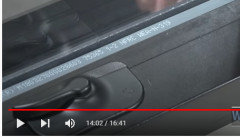
In the WS to Pella video Mr. Hauser forgoes any mention of spacers preferring to talk specifically on glass performance, i.e. U factor, LowE coatings, argon fill, etc. On this I give him props for trying although he kind of messes up some of the specifics about how this stuff actually works. He did mention for example that argon was used for convection, but then went on to describe it as conduction...but he does get the point across.He does mention both products are energy star and finally mentions that WS has glass options that could possibly outperform Pella, which is simply wrong.
And to the Marvin to WS glass comparison.
Starts off taking about single pane to dual pane then adds in LowE coatings which are "...a metallic alloy that is sprayed on the inside portion of the glass". That description makes me cringe but...nope nothing more, it makes me cringe. Next he talks about argon fill which is 38% denser than oxygen and so blocks heat and cold passing through the glass. If comments were available I would have asked, "since oxygen is 21% of our air, what about the 78% that is nitrogen? How does argon fill affect that?
Next he states that both products can be energy star rated and both can be equal, "but we (WS) should be able to outperform them" (Marvin)".
Remember when stainless steel / metal spacer was bad in the Andersen comparison? Apparently that is no longer true because next he mentions how both Marvin and WS are using a stainless steel spacer system, then looks visits the Marvin window first.
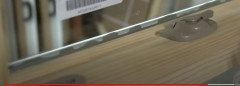
Mr. Hauser states that this appears to be excess glue related to the spacer Marvin is using, but he doesn't know what caused it. I have no doubt that is a totally honest appraisal of what he sees there, but actually this is an issue with glazing the glass into the sash, this is NOT from the spacer.Clearly this is unsightly and in my opinion is totally unacceptable and should be replaced, but I can't speak to the warranty covering what happened to this sash. Knowing Marvin reasonably well, I would expect that they would replace this sash under warranty, but again that's only my personal opinion.
Then showing the WS window that uses the Cardinal Endur stainless steel spacer system. This is an upgrade from the system used in the Andersen video. Apparently it's now okay to use the premium stainless steel spacer now.
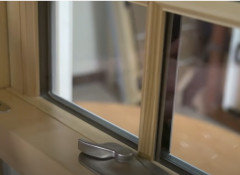
Cardinal has two different Stainless steel spacer systems, XL and Endur. XL is the older system Endur being the newer. Marvin, Andersen, Pella and WS all have access to and use both systems depending on their preference. The primary difference is that Endur is about 2°F warmer at the edge than XL. Long term durability and longevity should be pretty much identical.He then goes on to explain an NFRC sticker, once again saying that despite using the same glass and glazing system, WS can outperform Marvin (or Andersen or Pella in previous videos).
The final thing I want to mention is the air and water dam that WS uses on this window. I find it very aesthetically displeasing. Actually I think it's ugly and looks very unprofessional. It also concerns me that they think they need it, while Mr. Hauser speaks of it as a plus that no one else uses.
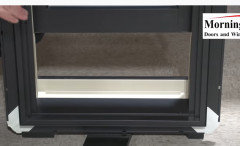
That white thing sticking up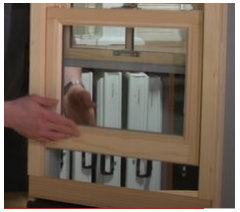
Definitely not a fan of that "board" at the base of the window. The bottom rail slides behind it and is partially covered by it when closed. To me that alone is a reason to be very wary of this product.Reuben Cahn
last yearThanks for taking the time to post this detailed explanation. It's greatly appreciated. Getting solid information about the relative quality of windows is extraordinarily difficult. Based on the feedback here, I've ruled out WS and Jeld Wen. Waiting on pricing for Andersen A Series to compare to the Marvin Elevate and the Milgard Ultra. I'm going to go take a look at Kolbe Forgent tomorrow. Then I'll try to decide between Milgard, Andersen, Marvin, and, if I like them, Kolbe. All seem to have fairly solid reputations though I've read complaints about all of them.
- PRO
Windows on Washington Ltd
last yearYou need to put Oberon on your Christmas Card list for that right up. Easily one of the biggest brains on anyone in the fenestration industry and you got his expertise for nothing.
He charges me per phone call like an attorney. lindawilkins63
last yearI have had WeatherShield windows in my home for over 30 years —- aluminum clad wood windows with grills, low e , argon filled without one failure. 34 windows in total. Great experience.
oberon476
last yearlast modified: last yearYou should consider yourself fortunate then, not many can make that claim. I hadn't realized that Weathershield even offered LowE and argon over 30 years ago. Not all companies did back then.
Do you know what LowE coating they used on your windows?
Curious first ever post, btw.
- PRO
Windows on Washington Ltd
last yearYeah. Must have really had to ask for the Low-e back then. Where is the home? Climate region? Interesting indeed Oberon.
Reuben Cahn
last yearlast modified: last yearI thought I'd update on our search. Received quotes on Milgard Ultra, Kolbe Forgent (wood interior), Weathershield Signature, Marvin Elevate, and Marvin Signature Ultimate. The Milgard, Weathershield, and Kolbe were comparable in price. Though the Kolbe quote included two doors from their ultra line because we couldn't get the French doors with operable side lites in the Forgent line. The Marvin Elevate was a bargain at about 20% less. Like the Forgent, we couldnt' get the configuration we wanted on a couple of doors. Apparently, Marvin doesn't do operable side lites. Had we gone with the Elevate, we would have needed to substitute from a different line or give up on operable side lites. Marvin Signature was predictably the most expensive but not as much more as I expected.
In light of the comments here, we didn't look that seriously at the Weathershield. The Milgard and Forgent seemed like great windows, very cleanly finished, casements operated smoothly, and easily, etc. I think the finishing of both was maybe a little better than the Marvin Elevate. But the Marvin Elevates were also very nice. The Marvin Signatures were in a whole different class in terms of appearance. They are beautiful. And I trust they are as good as everyone says. Ultimately, we went with the Marvin Signatures. The cost difference for a product we'll have for 20 years seems justified in light of the quality and appearance. We had to compromise on one door and on another where we absolutely wanted the operable side lites, we substituted an Andersen E Series door. Now we just have to wait. Looks like four months for delivery.Rich
last yearlast modified: last yearHi Reuben thanks for posting. We are in the same boat too many options . we got a quote from pella but now are waiting for elevate quote. went to local distributor of WS and they said the owners of the company (one guy got Millgard and the other owner got WS) the milgard owner now wishes he got WS but in light of the posts here it sounds like buyer beware
i found the elevate windows to feel pretty flimsy what were your thoughts on signature? what was the deciding factor(s)?
Reuben Cahn
last yearTo my eye, the Signatures were clearly superior to everything except the Andersen E Series. The fit and finish was impeccable. The operation was smooth. They felt absolutely solid in every way. But ultimately, Marvin's reputation and comments from knowledgeable people on this board were the deciding factor. Everything apparent to me about the Signatures was equally true of the Andersens. Actually, the Andersens were prettier--though I couldn't say why.



mcsbldr