




|
| I'm in the middle of renno-ing the living room of my 1920s bungalow. In addition to the various age related cracks in the walls, some old plaster repairs chipped off and I removed the rest of what would come loose.
This 'repair' was over a large section of wall where the original built-in collonade/bookcase served as the room divider. The prior PO (probably 1950s PO...) removed the matching bookcase collonades, unfortunately. It appears that upon removing the bookcases that a large chunk of wall went with it. They filled a large hole with modern day plaster product. Since I do not have a smooth surface, I assume I will have to sand it down with an electric sander and then plaster over the surface to make it even. The plaster appears attached to the lathe with no movement, but the wall is heavily cracked in the exact outline of the collonade approx. 5ft tall, plus other random cracks. Initially, I was thinking I'd have to go the plaster washer/bolt route. But, I'm now thinking simply re-plastering is all I need to do to fix it since the wall isn't seperating from the lathe. I have been using 'All Purpose Joint Compound (pre-mix jar)' on the other smaller repairs, but bought the box of Sheetrock Patching Compound (add water and mix...) plaster of paris/limestone, etc. stuff. Am I on the right path for this repair and using the right product? It's a large space so I don't want to screw it up and then have to redo it. Thanks for the tips/advice! |
Follow-Up Postings:
|
| A bonding agent may also be needed to get a new top coat to reliably stick to old plaster. It is very hard to sand real plaster, the stuff is hard. Easysand is good for plaster patching but is soft enough to sand. Durabond is as hard as the old plaster, son unless you can work it well enough to not require sanding avoid using it. Spider cracking has many causes, and may be confined to the finish layer. |
|
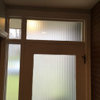
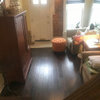
| Hi B.E. Thanks for the response! I thought it may be helpful if I posted some pics of my lil' project. Is the plaster that I have purchased the same as Easysand? Or is that something special I need to purchase for this task? Is there anyway to sand Durabond or smooth it? I do not know if that is what was used, but have a 'bad' feeling it was. I've been removing some of the old paint on the window trim also, so that's why it looks the way it does. ...Pretty isn't it? LOL... If you have any suggestions based on these pics (or anyone else in the forum), I'd love to hear your perspective or prior experience! Thanks much! Damaged wall and evidence of old water damage:
Close up of uneven new plaster surface on original wall:
Full view of wall:
|
|
| "Is the plaster that I have purchased the same as Easysand?" Easysand and Durabond are USG products. There are some other brands of setting compound out there. The problem with 'patching plaster' (even the USG stuff( is that the final coat is rarely just plaster, but a mixture of plaster and lime putty. Plaster sets way to fast (even with a lot of retarder) and straight lime putty sets way to slow (months). The mixture of the two provides a surface that sets in a few hour and then continues to harden for weeks. Durabond and Easysand both harden by the same chemical reactions as plaster, and not by drying out like premixed drywall mud. If you do not have much experience with plaster repair, stick with Easysand. Do not try to achieve a perfect finish on the first coat, but try to not leave excess material. Easysand can be scraped with a drywall knife after it hardens to remove any lines or other marks sticking out, and then another layer applied. You do not need to wait for Easysand to dry before recoating, just harden. Durabond is as hard as real lime putty plaster and very difficult to sand. |
|
| Thank you so much for the guidance. I am learning as I go, so really appreciate your insight. I will look to pick up some Easysand at Home Depot this week so I can get this patch job moving. I figured I'd hit that lumpy repair plaster with an electric sander - 60 grit paper. Hoping that works so I can smooth out the wall. Again, thanks for the advice! :) |
|
| Okay...I feel really dumb. I checked the box of patching compound that I have and it is indeed the USG Easy Sand 5 (red/white/blue box). I never noticed that before. Oh well...at least I know now that I have the right stuff! :) Thanks again! |
Please Note: Only registered members are able to post messages to this forum. If you are a member, please log in. If you aren't yet a member, join now!
Return to the Old House Forum
Instructions
- You must be a registered member and logged in to post messages on our forums.
- Posting is a two-step process. Once you have composed your message, you will be taken to the preview page. You will then have a chance to review the contents and make changes.
- After posting your message, you may need to refresh the forum page in order to see it.
- It is illegal to post copyrighted material without the owner's consent.
- HTML codes are allowed in the message field only.
- No advertising is allowed in any of the forums.
- If you would like to practice posting or uploading photos, please visit our Test forum.
- If you need assistance, please Contact Us and we will be happy to help.