

|
| Hello,
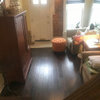
I am renovating my 1904 home and am at re-doing the floor in our living room. After pulling up the 40 year old carpet(seemed that old) we have some nice old hardwood floor underneath. The floor boards are about 3/8 thick and 2 1/2" wide.(looks like oak flooring)
My questions are....
Next question....
Any input would be greatly appreciated. This is a great room, we have spent the past several months on this room and put wet wall back up in there over metal lath... what an experience. Looking forward to input on the floor. Sincerely, Jeffrey |
Follow-Up Postings:
|
- Posted by mrsrichards (My Page) on Wed, Jan 12, 11 at 20:10
Well, I am *not* a flooring expert. However, I have been exploring the same ideas with my 1904 Victorian home. I was advised to figure out what finish was on them and go from there. What I have decided is that they were most likely shellaced and waxed. For now, we are going to re-wax and buff them... my dilemma is if I should also re-shellac them before waxing. From what you are saying, your floors have been lightly sanded and you like the color and patina that they are showing. This can be preserved by shellacing them with just a few layers. I will try to include a picture of our stairway; this was just done with 2 coats of shellac yesterday. There are before and after shots... Also, try the flooring forum. I got great advice there, too! Uploaded with ImageShack.us |
|
- Posted by mrsrichards (My Page) on Wed, Jan 12, 11 at 20:16
| Here is the before of the stairs; and the "after" shot looks really shiny with the flash. I promise they are not that glossy looking in real life! The only preparation I did was a thorough vacuum and wipe down with a damp cloth. The entire process took me about 5 hours total, and since the shellac dries so quickly we were able to walk on it (in socks) that night! Uploaded with ImageShack.us |
|
| I am not an expert either, but I have refinished floors in two homes...one is oak with a wax finish and the other is heartwood pine with a polyurethane (previously shellaced) finish. As far as cleaning, I would just sand - you would be surprised how discolorations will be lifted once a light sanding has been done. I would not use any cleaners on the bare wood - good chance it will interfere with the finish coats. You need to determine if there is or was a finish on your boards - shellac, oiled, or waxed (from what you have described, perhaps old waxed or oiled floors). Between a poly and a wax finish, I prefer a wax primarily because it by far (IMO) results in the most beautiful finish - it really brings out the depth and beauty of old wood (some also prefer linseed oil finish for the same reasons). You will have to strip and rewax annually, but it is a DIY job with a buffer. And it is convenient in that sections can be done as needed - high traffic areas can be touched up as needed (poly usually requires re-finishing the entire floor to avoid demarcations). There is a Bruce product that strips and waxes in one step - love it. I have also found that wax provides a better protective layer than poly - poly tends to crack and peel (especially with pet claws). Once you wax a floor however, it will be difficult to transition to poly because wax residue in cracks and crevices will prevent the poly to adhere. On poly floors, they recommend "screeing" the floor in five years after sanding and refinishing it - it consists of a light sanding with poly reseal. Because of the hassle of moving furniture, the expense of hiring out the work (3000k for 1200 s.f.), the lack of being able to touch up the floors myself, and just the "flatness" of a poly finish...I will be converting to wax when it comes time to refinish my poly floors. Just my 2 cents. Good luck! |
|
- Posted by mrsrichards (My Page) on Thu, Jan 13, 11 at 19:10
| roses4me, you might be just the waxed floor expert (and advocate)I have been looking for! Sorry to steal your thread jefsboys.... I did a trial wax area on one of my oak floors with Bruce liquid paste wax. I really love how it makes the floors look, as you said it just really seems to enhance the color so much. Did the floors you waxed have a shellac finish on them to start? I'm thinking that my floors were shellaced, then waxed. I have one question for you; when you are using the Bruce product, do you pour it out onto a cloth then rub it around? Have you ever tried any of the Johnsons paste wax? It seems like it takes a lot of the Bruce liquid paste, so I was wondering what you thought in relation to the Johnsons paste... Thanks for any input! |
|
| :-) Glad I could help. Thank you both for your input. When I put a few drops of water on the floor it doesn't get sucked into the wood immediately so there is something there. Several great points to make this decision tougher. :-) I very much appreciate any and all input. Jeffrey |
|
- Posted by mrsrichards (My Page) on Fri, Jan 14, 11 at 10:31
| Just curious, what was the steel wool dampend with? Denatured alcohol will gum up if there was shellac. Mineral spirits, I hear tell, will dissolve wax, and if wiped on with a white cloth will show a yellow film. And from what I have heard (bear in mind here that I am still not 100% sure what is even on my own floors!) if the water doesn't immediately soak into the floor it is likely covered with some type of wax. But then I have also heard that if it is shellac a white film will form... and I believe some of my floors had been shellaced, although the white film thing did not happen for me. That all being said, if you determine that there is no finish on them I would say lucky you! Nothing like a clean slate to start out with ~ if that were the case for me I would shellac them, then wax. Please do let us know what you end up doing. I have an entire house to experiment on - er I mean "refinish", so I would love to hear what works, or does not work, for you. Pictures would be cool to, if that is an option for you ;) |
|
| I have put three images here and labeled them. On the test with the steel wool the only thing returned was dirt :-), no off colored residue. As you can see the original untouched floor is all the way to the left as it was under the trim. I so much appreciate your input on this and I will gladly share with you what I do. I have a whole house to refinish as well and this is the first room. The goal is the least amount of maintenance as possible, we don't mind the rough look but want it to be protected. |
|
| I found a better sample. In this image you can see I used steel wool with water which had results of removing finish. The cloth with alcohol removed the finish, it appeared to be a yellowish residue on the cloth after wiping and I could feel the alcohol penetrating into the finish and wiping it up. The cloth with mineral spirits seemed to do the least and with about the same rubbing as with the alcohol the mineral spirits returned little results and didn't feel like it was softening the finish. Uploaded with ImageShack.us |
|
- Posted by mrsrichards (My Page) on Fri, Jan 14, 11 at 13:29
| Interesting; my first thought was that you probably have shellac, especially with your description of the den alcohol effect and lack of response to the mineral spirits. But them I'm not so sure when I see how it reacted to the water. The off color from the mineral spirits could just be 100+ years worth of dirt, but may also be from wax. Then there is the possibility that the water got down to varnish. How's that for a non-answer, lol! As for the least maintentance I guess polyurethane is your best bet. The things that has me leaning towards shellac are first; I can do that myself. Second; if there are any scratches to the surface they are easily repaired by going over with fresh shellac. Third; since I am fairly sure they originally had shellac I don't have to worry about getting all of the old finish off, the new shellac will just meld-in with the old. The only drawback I know of (someone please pipe up if I am wrong!!)is if there is a spill, it may penetrate the shellac more easily. But again, that can be repaired by reapplying shellac. Thanks for letting me in on this adventure, I wish I had more experience to speak from. We shall venture forth together ~ Keep us posted ;) |
|
| Thanks for your input and it is all helpful. :-) I think I may have misread something on using poly because it seemed to me that putting poly on the floor could be something that I could do relatively easy. Again, thank you so much for your time. Jeffrey |
|
- Posted by mrsrichards (My Page) on Fri, Jan 14, 11 at 17:53
| Yes, it is more the prep work that I do not feel comfortable doing myself. I imagine the application is maybe even easier than shellac. And I'm not sure with poly, can you just put on clear poly and have it enhance the wood's natural colors? Or does it require staining of some kind. If you have the hang of sanding that is to your benefit for sure. I have not tried and don't plan to in the near future ;-) At this point, I am just one energy burst away from doing a small trial area of shellac on the floor in our spare bedroom. I'll let you know how that goes. |
|
- Posted by sombreuil_mongrel (My Page) on Sat, Jan 15, 11 at 12:38
| To put oil poly on your floor, the entire will need to be sanded down. (you'll lose patina) but oil poly + shellac (and the ever present wax) don't mix; the poly will turn whitish. If you hand-stripped the floor with chemicals, you'd save all the patina in the wood. Of course, that means stains and gouges and other signs of wear and possibly abuse. The bright side is, that you have a fantastic quartered oak floor! A talented refinisher could tell you is sanding is the best option; a given floor can only be sanded so many times; poly's can only be renewed by sanding, so whatever you do now has bearing on the future of the floor. Finishes that are beautiful, durable, and renewable without future sanding are out there, and may be thought of as the most "ethical" approach. I used one such (Waterlox finish) on my kitchen floor. Casey |
|
| Thanks for that information..... What would be recommended for our floor to keep the patina? We are perfectly fine with any stains, gouges and other signs of wear. The important thing is to keep the patina that is present at this point in time right now. We have hand sanded the entire floor already, albeit not as deep as a power sander would do but any residue that may have been on top of the floor is now gone, the only thing left is anything that has penetrated in the wood. I am good with chemical stripping if that is the best method to keep the patina. Please give me your thoughts on this. Thank you, Jeffrey |
|
| I pulled off the tarps that have been covering the floor for the past few months while painting and doing trim work.... I am now reminded that they still need some sanding.... I am also more alert to the fact that they did have some kind of wax or shellac on them as you can see in the newly taken/loaded photo below. If I sand all that old wax off can I then go a route other than wax or should I go with wax again? I like Waterlox finish but that seems to be calling for a deep sanding that would get rid of the patina. I don't think the floor can really stand a full sanding from a machine and I do have the manpower to hand sand these floors. My body testifies to me daily the hard route I have taken on this renovation. :-) |
|
| Below is a side view of a piece of the flooring from around one of the registers. It is about 3/8" thick. I have been trying to avoid the complete floor sanding but so far it isn't sounding good. As long as my floor can take a good sanding that is what I will do. |
|
- Posted by mrsrichards (My Page) on Sat, Jan 15, 11 at 20:02
| My bias is still towards shellac, especially to maintain patina. If there are no major gouges to sand out I am thinking all you have to do for further prep work is go over it good with mineral spirits to be sure you have all of the wax off. If it is indeed shellac you don't even have to make sure it is all off. The new shellac with just smooth right into the old, and the color match will happen automatically. Again, this is all said by a person with very limited knowledge of any other methods out there... There is a second place that I have found very helpful with old home information that you could check out. Not to steer you away from here, but just to add to your resources. Garden web has helped me through many things too! You can search for old house web, that might get you there ;-) |
|
| I finally contacted the previous owner and they said the carpet has been down since about 1970 and that the best they can remember varnish was used. If I go with Varnish do I need to sand completely? If I decide to Shellac over the varnish does this need a complete sanding? As I indicated above we have hand sanded but as you know that is not as thorough as running a big sander on them. Please give me your thoughts and experience. Thanks, Jeffrey |
|
- Posted by mrsrichards (My Page) on Sun, Jan 16, 11 at 21:06
| That is great, to know exactly what was there - lucky ;-) ! I'm afraid my experience stops at this point. However if I have researched correctly shellac can go over a varnish that has been well established. Hopefully someone else can tell you more ~ or try the woodworking or flooring forum. It sure will be helpful for you to know exactly what you are dealing with, though! Continue to keep us posted... |
|
- Posted by columbusguy1 (My Page) on Sun, Jan 16, 11 at 22:39
| Hi...here's my opinion based on your last picture: if your flooring is only 3/8" thick, I don't think you have enough wood left before you expose the tongue and groove joints between boards--once that happens, you may as well pull it all up and junk it--unless you can flip it over and finish the underside. Floors can only take so much sanding, and if yours has had one already, I wouldn't risk it. Go with a stripper and recoating. |
|
| MrsRichards...sorry for the late reply...been off the computer over the weekend. My oak floors were originally waxed...no shellac. I might be wrong, but I consider shellac in the same line as poly...it forms a hard finish impermeable to wax. I use the Bruce product as light cleaning in between the annual cleanings - I use old clean rags - takes off light dirt yet leaves a protective wax finish. If the floor has a lot of really dirty wax, I use fine steel wool and mineral spirits and wipe with rags until clean. I have used Johnson's Paste wax, but the Bruce I like better because you don't have to buff! Clear poly on sanded floors darkens the wood just a tad. When they sanded my pine floors, they were almost a creamy yellow color. When a clear poly went on, it darkened it very little. I needed stain to get the grain to show. Jefsboys...my vote is still with a wax to retain the patina. I have never done shellac as MrsRichards, only wax and polyurethane. Deciding on poly or wax depends on what is more important to you...patina or least maintenance? I feel wax or oil retains the patina and "depth" of antique wood. It requires annual stripping and waxing (if you have pets or kids), but it doesn't require sanding and you can spot treat as needed. Poly doesn't have the depth (looks "plasticy" IMO), requires sanding when it is time to refinish, and the entire floor has to be done at the same time (compared to being able to do areas as needed as with wax). I would assume that varnish would be the same as poly. As far as applying poly over shellac or varnish, I believe you would have to lightly sand between coats to ensure good adhesion - not total removal, just to scuff it up. I do agree that you don't have much wood left to sand. Personally if it was my floor, I would use mineral spirits or alcohol as needed to remove whatever finish you have (sounds like varnish or shellac maybe with a little wax??) and *lightly* just to even up the tone and remove stains if desired. Then put a good coat of paste wax over it. If you don't want a pristine finish (old floors with imperfections have character!) skip the poly. As a side note, you can always try out different finishes in a small area such as a closet. Hope this helps and doesn't confuse things further! |
|
- Posted by mrsrichards (My Page) on Wed, Jan 19, 11 at 7:19
| roses, thank you for the information! I will be waxing my floors *today*. Yikes... My final decision on the downstairs floors (oak) is they are waxed with no shellac. The upstairs (maple) appear shellaced and waxed. I will simply wax them today in order to add some protection to them. The Bruce product didn't require buffing? I spent last night spreading that on half of my dining room floor and plan to rent a buffer today. They have not been waxed in at least 12 years, so I did a pretty thick layer. I so appreciate your feedback ~ The areas of the floor that have been 100% protected by area rugs are so gorgeous, I wish I would have started this long ago. Not that they are in terrible shape otherwise, but to protect them more. Thanks so much again ~ If my project doesn't turn into a disaster today I will post some before and after shots. |
|
| mrs...please do post pics of your finished floors. Maples floors? They sound gorgeous. The Bruce product is called "Bruce One Step" No Buff Acrylic Finish for wax-finished floors. My pine floors were done only a few years ago, but the contractor did a horrible job in finishing them. Instead of staining then coating with a clear poly coat, he mixed the stain with the polyurethane. Every little scratch (thanks to my pets) show up since the wood isn't truly stained, only the poly Geesh,,live and learn. That is just one reason I would love to convert my poly floors in this house to wax...just so I don't have to depend upon contractors! |
|
- Posted by carol_from_ny (My Page) on Sun, Jan 23, 11 at 16:28
| Old House Journal for this month has some excellent articles on floor refinishing. You might want to take a look before you do anything. |
|
| Went with Waterlox Tung Oil. 4 coats in all. The finished picture looks a little darker than what it actually is as I had the flash turned off and there are no lights in the Living Room yet. We love it... still the character of the 107 year old home and a beautiful finish that should be very durable. This was a lot of hard work but well worth it. Only two more floors to go. :-) |
|
| Jefsboys, that floor turned out BEAUTIFUL!!!! Kudos to you on a job well done!!! This thread has been very informative to me as we are in the middle of the same process as you. Hubby and have had differing opinions on how to finish our own flooring..I will show him your "after" pic and hopefully he will join the "NO POLY!" team with me! |
|
| If you would go with the Waterlox it is very forgiving to apply, maybe many of them are, I only tried this. Most important is to read through their FAQ's to help anticipate any issues or to recongnize them; and watch the demonstration video they have, that is top notch and shows the technique to use for proper application. Any company that goes as far as they do to make sure their product produces the results you want will get my business. I must say that if you choose the Satin as your final coat you have chosen what I think is the toughest they have to apply. Best of luck on your project. Jeffrey |
|
- Posted by mrsrichards (My Page) on Thu, Feb 3, 11 at 17:05
| Wow-wow-wow!! It looks amazing ~ you must be thrilled. What all did you have to do for preparation? Way to go, I'm so glad that it worked out so well. |
|
| Preparation... This is the first I have done so I probably went over board a bit, but I am OK with it and will be able to eliminate a step or two on the remaining floors and stairway. A good set of knee pads was key to some comfort. :-) I wouldn't do this without them. 1. Used a palm sander to knock off built up carpet pad stain/remnants. 2. Used denatured alcohol and steel wool to remove old finish. Actually made 3 passes over the floor this way. Will only make two at most on the next floor, lesson learned. 3. Hand sanded entire floor to open up the wood. 4. Wiped on stain over the entire floor. 5. Applied Waterlox sealer/finish 6. Applied another coat of sealer/finish 7. Applied what I thought was going to be final coat of a Waterlox Satin finish. 8. Applied final coat. I spoke with Waterlox rep on this, I had two options, 1 was to sit it out and see if my streaks would go away with time(they said they probably would), second option was to re-coat. We love it. It has been about 36 hours now and it has a slight amber tint to it and is more better in appearance than we expected. We will do the 4 coats on the remaining floors as we did on this Living Room Floor. |
|
| Jef, I know this was your first floor you refinished, but you seem to have done your homework!! I don't know if you would know the answer to this question..but..... we are in the process of doing our sitting room floor. The layout is a bit strange..our sitting room is actually a "walk through" bedroom, which we use as a sitting room/den...the only way into our bedroom itself is through the sitting room. In order to have access to our bedroom, we would not be able to do the entire sitting room floor at one time, we would need to leave ourselves a path..and then when the floor could be walked on, we would do the "path" part. Would the Waterlox be suitable for being used this way? Or does it need to be done all at the same exact time? |
|
| jiggreen. I think if your floor runs in the direction you walk from door to door through that room you could certainly use a seam between two floor boards to be a midway point. You could finish up to half way across the doorway(your walkway) and still have the other half to walk across. In that case.... 1. Do the floor preparation at the same time. 2. Document each step you use in the finishing of the first half of the floor and replicate those steps on the second half. If you do that just make sure you come up with a way to keep dust, etc. off the floor that is drying/curing so that no dust, hair, etc. gets into the wet finish. I am actually going to be doing something similar. I just did our living room floor. We still have to do the dining room floor(in a couple months) and those floors are connected through a walkway. As far as blending the seam if your floor runs perpendicular to the way you walk through that room I am not sure. I am going to be joining two floor with the Waterlox in the second manner as above but it will be in the threshold of a walkway so that division of finishing the floor at different times will be kind of masked by the leaving of one room and entering into another. |
Please Note: Only registered members are able to post messages to this forum. If you are a member, please log in. If you aren't yet a member, join now!
Return to the Old House Forum
Instructions
- You must be a registered member and logged in to post messages on our forums.
- Posting is a two-step process. Once you have composed your message, you will be taken to the preview page. You will then have a chance to review the contents and make changes.
- After posting your message, you may need to refresh the forum page in order to see it.
- It is illegal to post copyrighted material without the owner's consent.
- HTML codes are allowed in the message field only.
- No advertising is allowed in any of the forums.
- If you would like to practice posting or uploading photos, please visit our Test forum.
- If you need assistance, please Contact Us and we will be happy to help.