


|
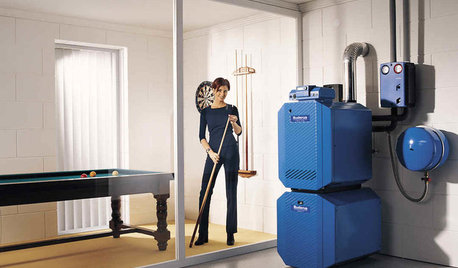
| I have an unfinshed basement that I want to partially finish and keep partially unfinished as a woodworking shop. I have all of my furnace equipment on the workshop side. I heard you need to enclose the furnace from the workshop, but I know you need some circulation around that equipment as well. Any knowledge on the subject would be appreciated. |
Follow-Up Postings:
|
- Posted by lazypup (lazypup@yahoo.com) on Sat, Oct 27, 07 at 8:25
| is it a gas or electric furnace? |
|
| I have an electric heat pump and gas furnace. |
|
- Posted by lazypup (lazypup@yahoo.com) on Tue, Oct 30, 07 at 2:21
| Being both a plumber and an avid woodworker I know first hand that you are confronted with two distinct problems. 1. Enclosing the gas furnace will result in creating what is called a "confined space" and will require making provision for an outside source of combustion air. 2. The woodworking process will generate highly flammable micro-fine sawdust particulates in the working atmosphere as well as occasionally producing volatile fumes from the finishing process. By code definition a "Confined space" is any space, which has less than 50cu.ft for each 1kBtu per hour. To determine a confined space we begin by totally the BTU/Hr rating of all combustion equipment within the space. By example, a residential furnace will typically range between 50k and 200kBTU/hr. For the sake of illustration let us assume for the moment that the data plate on your furnace rates the burner at 100kBtu/hr. Now let us assume for the moment that you also have a water heater in the same space and the water heater is rated at 35kBtu/hr so your combined combustion load would be 135kBtu/hr. We are required 50cu.ft for each 1kBtu so we multiply 50cu.ft x 135kBtu = 6,750cu.ft. Allowing an 8’ ceiling we then get 6,750 / 8 = 843.75sq.ft. You then multiply the length x width of your proposed machinery space and if it yields less than 843.75sq.ft it would be classified as a confined space and would require an additional source of combustion air. The codes allow us a number of different configurations for ducting in outside air, and each configuration has a different formula, therefore you should really consult an HVAC specialist in your area that could give you the requirements for your jurisdiction. By example, you could have a single horizontal opening through an exterior wall, which provides 1sq.in for each 3kBtu/hr. (135kBtu/hr / 3 = 45sq.in) but there would be height above finish grade restrictions to compensate for average snow load or other considerations. You could have two vertical ducts through the roof, one terminating near the ceiling of your machinery space and the second one terminating 12" above the floor, in which case you would be required to have 1sq.in for each 4kBtu. (135K / 4= 33.75sq.in) This could then be done with 7" diameter flue pipe. Once you have provided the necessary combustion air you would also need to consider how the return air gets back to your air handler. In many residential structures the return air is drawn directly into the furnace and is returned to the basement by infiltration from the floor above. In this case you would need to install return air ducting from the living space. Because the airborne sawdust or volatile vapors in the woodworking area are potentially flammable the door between the woodworking space and the machinery space should be equipped with weather stripping to minimize air flow between the two spaces.
|
|
| lazypup, thanks for all the great info. We just built the house 8 months ago, so I will go back and consult with the original HVAC installers. But now I have enough info to ask the right questions. I know we have return air vents already and I see some big plastic pipe extending from the furnace to the outside of the house. And we have an instant water heater (not gas). We might be in good shape other than a good seal between the spaces to address dust and fumes from the work area. Thanks again! |
|
- Posted by lazypup (lazypup@yahoo.com) on Tue, Oct 30, 07 at 23:41
| From your description your furnace already has ducted combustion air from the outside so you should be good to go on that point. The only other considerations that I can think of at the moment is to be sure to allow adequate work space around the furnace and be sure the door is large enough to permit removing the furnace for replacement in future. |
Please Note: Only registered members are able to post messages to this forum. If you are a member, please log in. If you aren't yet a member, join now!
Return to the Garages/Workshops Forum
Instructions
- You must be a registered member and logged in to post messages on our forums.
- Posting is a two-step process. Once you have composed your message, you will be taken to the preview page. You will then have a chance to review the contents and make changes.
- After posting your message, you may need to refresh the forum page in order to see it.
- It is illegal to post copyrighted material without the owner's consent.
- HTML codes are allowed in the message field only.
- No advertising is allowed in any of the forums.
- If you would like to practice posting or uploading photos, please visit our Test forum.
- If you need assistance, please Contact Us and we will be happy to help.