



|
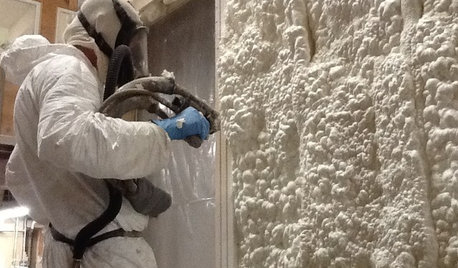
| We're building 2x6 walls in Nebraska. My contractor has suggested applying 1" of spray foam all along the exterior walls and rim joists, then filling the cavity with fiberglass batts. I was a bit surprised, as it was my impression that the best assembly for me would be 2" of foamboard on the exterior to prevent thermal bridging, instead of spray foam.
I've been researching, but I'm having trouble drawing a clear conclusion between these options. Should I go with the spray foam or the exterior board? We're working with a limited budget but we're willing to invest here if it's worth it. Thanks for any thoughts. |
Follow-Up Postings:
|
- Posted by energy_rater_la (My Page) on Wed, Oct 24, 12 at 17:21
| I'd put the foam sheathing on the exterior walls. seal all seams & holes prior to cladding. conventional insulation in walls. air tight drywall to interior. sole plates caulked to slab or sill seal under foam on exterior will eliminate thermal best of luck. |
|
|
- Posted by david_cary (My Page) on Wed, Oct 24, 12 at 20:29
| There certainly is no controversy - rigid foam to the exterior is the best option It sounds like your contractor is trying to do flash and batt with a clear r-value of 15. Fiberglass in the walls with 2 inchs of rigid foam is a clear r-value of 22 or 50% better. Am I misunderstanding something here? |
|
| DV and others are exactly correct. Add the 2" (r10 XPS) to the exterior. Save money and skip the spray foam except at the floor joist. Go with open cell here, about 6-7", and save some money. Cont. your XPS over your joist band and down to your foundation to give yourself a continuous thermal break. (better yet, continue the 2" all the way down to the footer) ALso recommend skipping the batt all together and selecting a blown fiberglass or cellulose product. If going 2", you will need to strap it for attachment of siding materials. Whatever you do, do not let your contractor convince you the proposed flat and batt is better. it is not. my go to air tight framing system is 2x6 walls with air tight gyp, blown fiberglass or cellulose walls (not batts), huber ZIP sheathing, exterior foam (2"+), strapping and siding. |
|
| Thanks for the advice. You've confirmed my thoughts, and given me a lot more to think about. How important is the airtight gyp? With adding gaskets or tons of calk and airtight boxes, I can see that adding a lot of expense... I'll have to look into the ZIP sheathing, I've seen that used around here. Part of the issue is that our builder has been wonderful to work with, and I don't want to force him into using a lot of unfamiliar techniques. Foam on the exterior sounds important enough to insist on, plus its something I'm comfortable doing, and I'll be doing the siding myself, so that's fine. The foam should only complicate the brick ledge on the front of the foundation, and then I suppose also the window returns and sills... |
|
| You will want to check out the excellent article in Fine Home Building magazine about flash and batt. One inch of foam will definately cause a condensation issue INSIDE your walls in your climate zone. I used to live in Lincoln Ne (go Huskers!) now live in much warmer Pa but it is recommended to be at least two inches of foam in my mild zone 6 climate. Go with exterior insulation but pay attention to the condenation issues. You dont want mold happening. We did Zip sheathing and are going with blown cellulose inside. The Zip was minimnally more $ Well worth it. |
|
| The overwhelming consensus is that foam board on the exterior is superior. Roger that. We are submitting plans in the next couple of days for the detailed bid from the builder (and hope to submit the building application very quickly thereafter, assuming the bid is generally acceptable). Next question: What modifications do we need to make to the rest of the house to accommodate 2" XPS on exterior? I see issues with brick mold where we will have stone facade, windows, etc.? Since my builder has not done this before, I'm a bit at a loss, and I'm having trouble finding all of this info online. I may wind up doing all of the foam board install myself as part of the siding, so I'm concerned over this. Thanks for any thoughts! |
|
| Numero Uno: the framers have to set back the floorplates far enough to accommodate the thickness of the foam and the thickness of any furring being used under wood or vinyl siding. Also, be sure windows are ordered with jambs deep enough to cover the greater wall thickness. At the worst, the trim carpenter may have to add some jamb extensions. Numero Dos The designer/architect should set out specific nailing patterns and attachment methods. Also, specific treatment of the window flashings. If you're using peel and stick flashings, the top jamb p&s must be further sealed to the foamboard with builder's tape--Tuck, Tyvek etc. Numero Tres XPS by itself is not an acceptable drainage plane. You must incorporate a weather resistive barrier, either under or over the foam. I use lapped building felt.
|
Here is a link that might be useful: Rigid Foam as water resistive barrier
|
- Posted by energy_rater_la (My Page) on Mon, Dec 3, 12 at 13:58
| With adding gaskets or tons of calk and airtight boxes, I can see that adding a lot of expense... gaskets are relatively inexpensive. Down Sill Seal under sole plates. caulking for sheetrock to framing. worthy's picture is a good example of this here in La. we don't see 2" foam boards, but I we used to have a guy named Rollie here who http://imageevent.com/okoboji_images/deloreshouse note the air sealing gaskets. while in my area what type heating a/c will you be installing? best of luck. |
|
| -worthy, I'm not sure what a floorplate is... is that the same as a sill plate? Do the sill plates need to be set back from the edge? Windows, it's more complicated than just ordering windows with larger jams though, isn't it? I was reading on Green Building Adviser about innies vs. outies, manufacturers that don't want you nailing through foam... my head is spinning! Nailing and attachment methods? That could just be long nails into studs and then furring strips, right? If we just use housewrap, that would cover the drainage plan bases, whether we tape the foam joints or not? -Energyrater, Is this all too much to ask from my builder? Thank you for all the advice! |
|
- Posted by energy_rater_la (My Page) on Mon, Dec 3, 12 at 19:52
| did something stupid & lost my reply...oh well... you'll find that there are different names for the if you are using brick exterior cladding you'll the sealing of sheetrock/drywall is second line air sealing is all in the details. talk to your builder and any mention of blower door testing of house? be thinking now about air sealing of house, once you build a tight house, then sizing of hvac there are some really good articles on this site http://www.energyvanguard.com/blog-building-science-HERS-BPI/bid/52136 /GUEST-POST-Lessons-Learned-by-a-Reluctant-Owner-Builder having the time to get it right now, is the most |
Please Note: Only registered members are able to post messages to this forum. If you are a member, please log in. If you aren't yet a member, join now!
Return to the Building a Home Forum
Instructions
- You must be a registered member and logged in to post messages on our forums.
- Posting is a two-step process. Once you have composed your message, you will be taken to the preview page. You will then have a chance to review the contents and make changes.
- After posting your message, you may need to refresh the forum page in order to see it.
- It is illegal to post copyrighted material without the owner's consent.
- HTML codes are allowed in the message field only.
- No advertising is allowed in any of the forums.
- If you would like to practice posting or uploading photos, please visit our Test forum.
- If you need assistance, please Contact Us and we will be happy to help.