

Broken Shift Fork?
sue36
My '98 Explorer Sport was making a thunking sound, especially if you would coast (no gas) and then step on the gas. Worse going down hill. Took it in today and they said it is a broken shift fork. It has around $140k miles on it.
What is the cause of a broken shift fork? Could driving style or other driver error cause it? Or is it normal wear and tear? Thanks.
Browse Gardening and Landscaping Stories on Houzz See all Stories
Most Popular
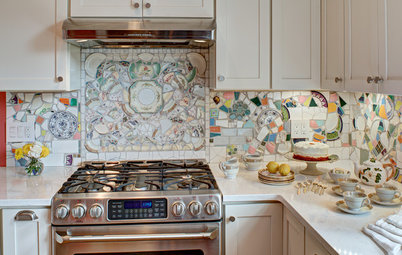
Kitchen of the Week: Broken China Makes a Splash in This Kitchen
By Becky Harris
When life handed this homeowner a smashed plate, her designer delivered a one-of-a-kind wall covering to fit the cheerful new room
Full Story

Life
You Showed Us: 20 Nutty Home Fixes
By Becky Harris
We made the call for your Band-Aid solutions around the house, and you delivered. Here's how you are making what's broken work again
Full Story

Life
Do You Believe in Luck Around the House?
By Becky Harris
Broken mirrors, spilled salt, an unavoidable ladder — superstitions don't seem to affect this homeowner. Knock wood
Full Story

Wannemacher Interiors strives to enhance their clients' lives by incorporating smart and functional design... Read More







As a full-service, family-owned remodeling company in New Albany, OH, we strive to bring our clients incredible... Read More
A manual transmission works by moving "slider" collars across blocker rings which lock different gears to different shafts. The shift forks are normally a "U" shaped piece of steel that engage the slider gears and push them into the positions desired by the driver to create the intended gear. The normal position for each slider is free wheeling, or neutral. When a gear is desired, first the driver moves the lever to a range position, such as 1&2, or 3&4 and then by moving the shift lever forward or rearward the driver causes the chosen fork to push the slider so that it locks the intended gear to the shaft. Over time, the fork wears both from use, and occasionally from a drivers habit of continually leaning their hand on the shift lever. Thats why it's common to see a particular transmission lose certian gears. Many transmissions lose second, or third gear before they lose any other. While they are seperate shift forks, they are the most two common gears to be changed under load or decel. That means as much as frequency of shifting, the drivers tend to never let go of the shift lever during changing those two gears, and that causes wear until evenually one of the forks get so thin that it does not properlly engage it's slider, and the slider "jumps" out of gear. In extreme cases, the fork can indeed break. Now if it breaks and the slider is engaged, your transmission could end up stuck in what ever gear it was in. Or normally, you simply end up with some gears functional, and others that you simply cannot get to engage.
HTH
Here is a link that might be useful: A manual transmission tutorial
John,
The transmission is automatic. I didn't think there were any shifting issues, it seemed to run through them fine. Just the clunk/thunk noise as described.
might be a shift fork in the transfer case.
Yes! That's it. What causes that?
LOL, I never thought about the transfer case, my first thought about shift forks is always manual transmissions.
Basically a transfer case is a special purpose manual transmission, controlled by an electic motor in your Explorer. So everything else that I said applies in your case.